
How to Check Your Property’s Rain Ready Ottawa Eligibility
If you’ve been following along with our recent landscaping projects, you know we aren’t only passionate about stormwater management, but we do something about it! Designing and installing features like rain gardens, soakaway pits, and permeable paving aren't just beautiful, they’re functional. These features keep heavy rainwater from overloading our city storm sewers and help protect local waterways.
The City of Ottawa’s Rain Ready Ottawa program is an incredible municipal initiative designed to support homeowners who want to make their yards more absorbent and climate-resilient.
Because eligibility depends on priority stormwater areas, the best place to start is the City's official interactive map tool, geoOttawa.
Here is a quick walkthrough showing you how to toggle on the Rain Ready map layer to check your property status!
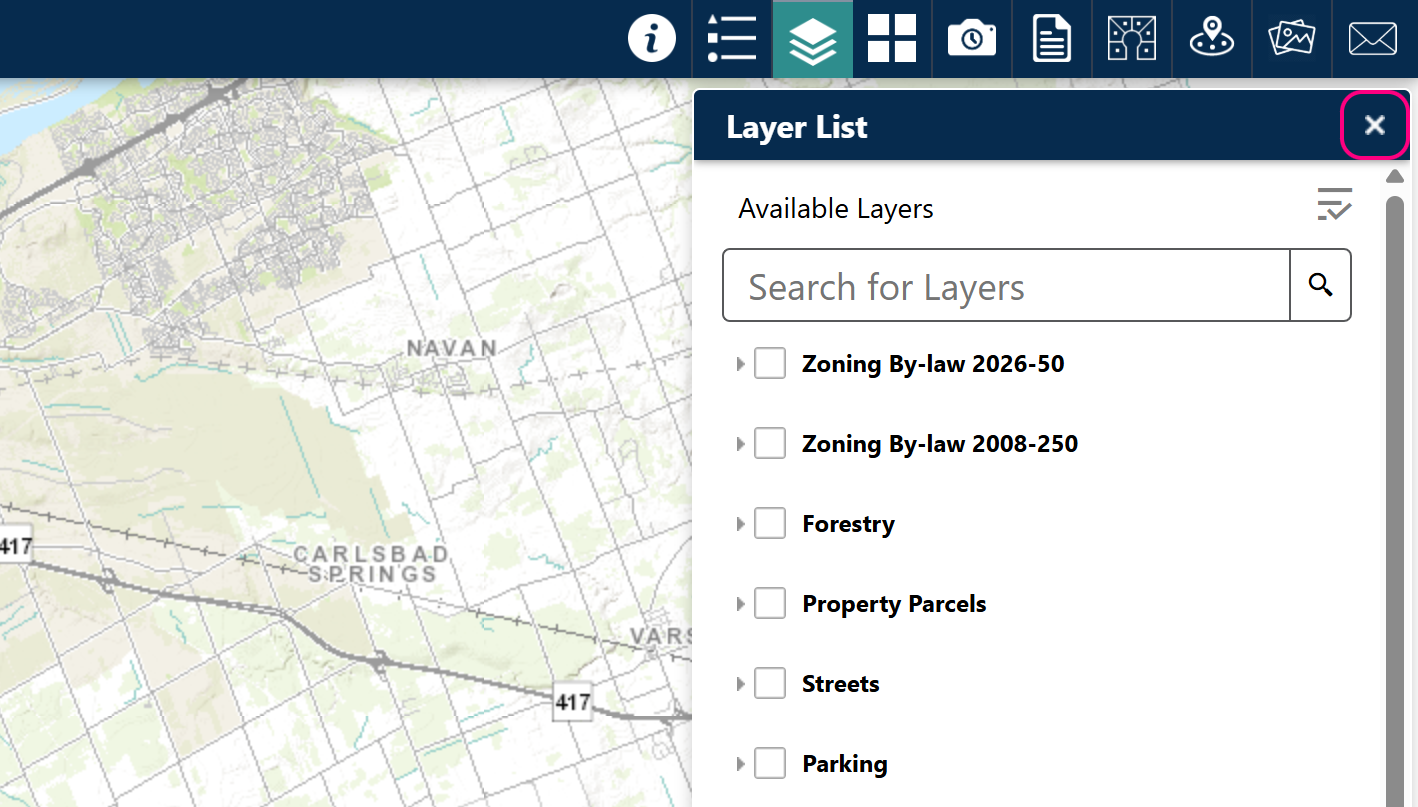
In geoOttawa: Open Layers Menu
In the menu tools, click on Layers to open up the full list of available data overlays.
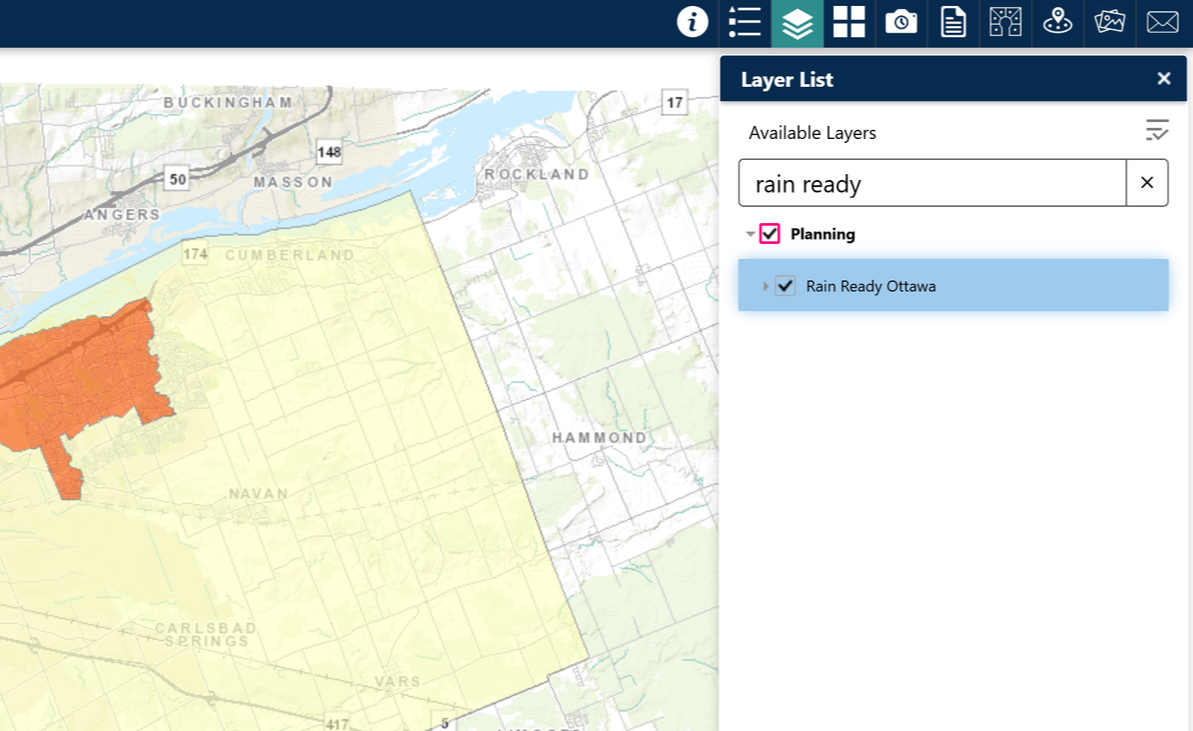
Search “Rain Ready” and Toggle On
Use the search bar within the layers panel to type in Rain Ready. Check the box next to the Rain Ready Ottawa layer and the Planning layers to activate it on your map.
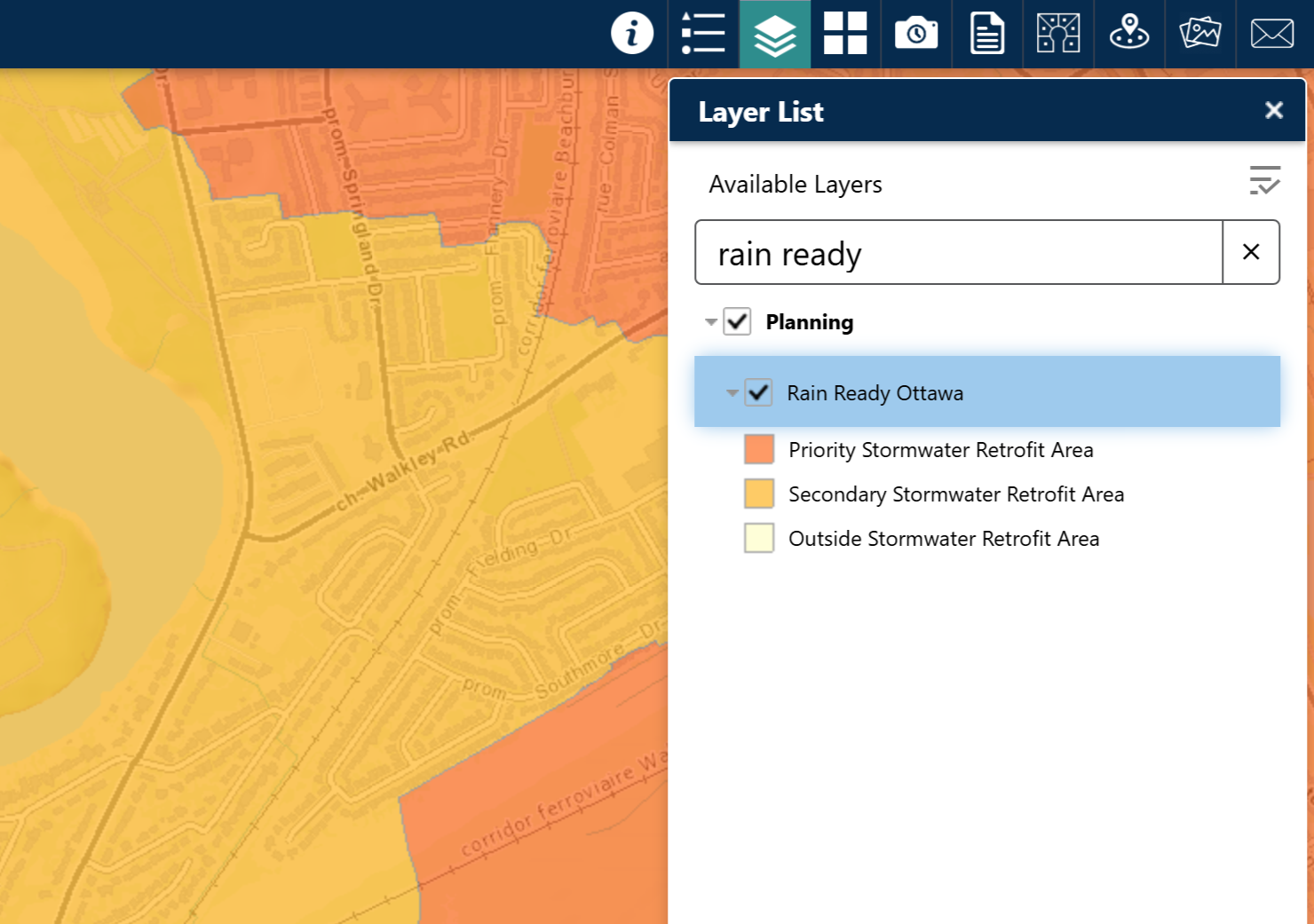
Open the Legend
Expand the Rain Ready folder to view the map legend and see what each colour corresponds to! From darkest to lightest: Priority Stormwater Retrofit Area, Secondary Stormwater Retrofit Area, Outside Stormwater Retrofit Area.
Search Your Address
Type your street address into the main search bar. The map will zoom directly to your lot, allowing you to instantly see if your home falls within a Rain Ready priority zone!
What to Do Next
If your address falls inside a shaded priority area on the map, you may be eligible to apply for municipal project rebates through the city.
The Rain Ready Ottawa program offers funding assistance for practical, eco-friendly projects that help manage rainwater directly on your property where it lands. These can include:
Downspout Redirections: Moving existing downspouts so water flows safely into garden beds or permeable surfaces rather than straight toward paved areas or sewer drains.
Rain Gardens & Soakaway Pits: Creating specialized, highly absorbent garden depressions filled with native perennial plants and loose soil amendments to naturally soak up run-off.
Permeable Paving: Replacing traditional non-porous driveways or walkways with materials that let rainwater drain naturally through to the soil beneath.
Because every property layout, soil type, and project scope is different, rebate amounts depend on the specific features you install and require prior approval from the City before construction begins.
Ready to transform your yard into a water-smart sanctuary? Whether your property sits inside an official priority zone or you simply want to stop water from pooling around your foundation, we’d love to help you build a functional, beautiful solution.
